Bathroom remodeling costs in Queens, NY, typically range from $10,000 for limited upgrades to $60,000 or more for a complete renovation involving premium materials, new plumbing, and custom finishes. Larger primary bathrooms and luxury renovations can cost considerably more.
For homeowners planning a bathroom renovation in 2026, understanding the costs before hiring a contractor can help prevent unexpected expenses and keep the project within budget.
Queens has a wide variety of residential properties, including pre-war apartments in Astoria, co-ops in Jackson Heights, townhouses in Ridgewood, and detached homes in Bayside and Forest Hills. Each property presents different renovation challenges, particularly when it comes to older plumbing, limited bathroom space, and NYC building regulations.
Whether you’re replacing a bathtub, upgrading your shower, installing new tile, or planning a complete bathroom transformation, this guide explains the major expenses, factors that influence pricing, permit requirements, and practical ways to save money.
Average Bathroom Remodeling Cost in Queens, NY, in 2026
The average cost of a bathroom remodel depends on the size of the space, the materials selected, and the amount of construction work required.
A cosmetic bathroom update that preserves the existing layout generally costs less than a full gut renovation involving demolition, waterproofing, plumbing, electrical work, and new fixtures.
Bathroom Remodeling Costs by Project Type
| Bathroom renovation type | Estimated cost |
|---|---|
| Minor bathroom refresh | $5,000–$12,000 |
| Basic bathroom remodeling | $12,000–$25,000 |
| Standard full bathroom renovation | $25,000–$40,000 |
| High-end bathroom remodeling | $40,000–$65,000 |
| Luxury primary bathroom renovation | $65,000–$120,000+ |
These are approximate 2026 NYC-area planning ranges rather than fixed prices or quotes from 718 Builders. Minor refreshes generally involve fewer trades and less demolition than full renovations.
For example, replacing a vanity, repainting, and upgrading lighting can be considerably less expensive than removing the existing bathtub, relocating the toilet, installing a walk-in shower, and replacing all the tile.
The condition of your existing bathroom also plays a major role in determining the final price.
Homeowners considering a complete renovation can explore bathroom remodeling in Queens, NY to learn about the different remodeling options available through 718 Builders.
How Much Does It Cost to Remodel a Small Bathroom in Queens?
Small bathrooms are common throughout Queens, especially in older apartment buildings and co-ops.
A typical compact bathroom may measure approximately 35 to 50 square feet, with enough space for a toilet, sink, and shower or bathtub.
A limited refresh might cost $5,000–$12,000, while a more extensive small bathroom remodel may require $18,000–$35,000 or more.
Despite the smaller floor area, the cost per square foot can be relatively high because plumbing, electrical work, waterproofing, and fixture installation are still necessary.
For homeowners in Astoria, Sunnyside, Woodside, and Jackson Heights, maximizing limited space can be just as important as selecting attractive materials.
Bathroom Remodeling Cost Breakdown by Expense
Bathroom renovations involve several different trades and materials, each contributing to the overall project cost.
Understanding these expenses can help homeowners prioritize upgrades and compare contractor estimates more effectively.
1. Bathroom Demolition: $1,000–$4,000+
Demolition is usually one of the first stages of a full bathroom renovation.
It may involve removing the existing vanity, bathtub, shower enclosure, toilet, wall tiles, flooring, and damaged drywall.
The cost depends on the size of the bathroom, the materials being removed, and how easily workers can access the space.
Demolition in a detached Queens home may be simpler than in an upper-floor apartment with narrow stairways and limited building access.
Older bathrooms may also contain materials that require additional precautions or specialized handling.
Before demolition begins, your contractor should assess the bathroom and identify any necessary utility shutoffs, dust containment measures, and debris removal arrangements.
2. Bathroom Tile Installation: $2,000–$10,000+
Tile is a major design element in most bathroom renovations.
The total expense depends on the material, tile dimensions, installation pattern, substrate preparation, and area being covered.
| Tile type | Estimated installed cost per sq. ft. |
|---|---|
| Ceramic tile | $10–$20 |
| Porcelain tile | $12–$25 |
| Subway tile | $12–$25 |
| Mosaic tile | $20–$40 |
| Natural stone tile | $20–$50+ |
| Large-format porcelain tile | $18–$40+ |
These estimates represent broad installed-cost planning ranges. Complex layouts, intricate mosaics, uneven walls, and extensive waterproofing preparation may increase labor costs.
Porcelain tile is commonly selected for bathrooms because it is durable and available in a wide variety of finishes.
Large-format tiles may create a more spacious appearance by reducing the number of visible grout lines, although they require careful installation.
When planning your bathroom, choose tile materials based on slip resistance, water exposure, maintenance requirements, and the overall design.
3. Bathtub Replacement: $1,500–$7,000+
Replacing an existing bathtub can significantly change the appearance of a bathroom.
The price depends on the type of tub, plumbing connections, access, and whether the surrounding tile and walls must be replaced.
| Bathtub type | Approximate installed cost |
|---|---|
| Standard alcove bathtub | $1,500–$3,500 |
| Acrylic soaking tub | $2,000–$5,000 |
| Freestanding bathtub | $3,500–$7,000+ |
| Custom or premium bathtub | $6,000–$12,000+ |
A straightforward replacement that uses existing plumbing connections is generally less expensive than installing a freestanding tub in a new location.
In older Queens apartment buildings, removing a heavy cast-iron bathtub may also add labor and disposal costs.
Consider whether a bathtub is necessary for your household or whether a walk-in shower would provide better everyday functionality.
4. Walk-In Shower Installation: $4,000–$15,000+
Walk-in showers are a popular upgrade for homeowners who want a contemporary bathroom with easier access.
The cost depends on the shower dimensions, waterproofing system, tile selection, glass enclosure, plumbing modifications, and fixtures.
A basic shower installation may involve a prefabricated shower base and standard fixtures.
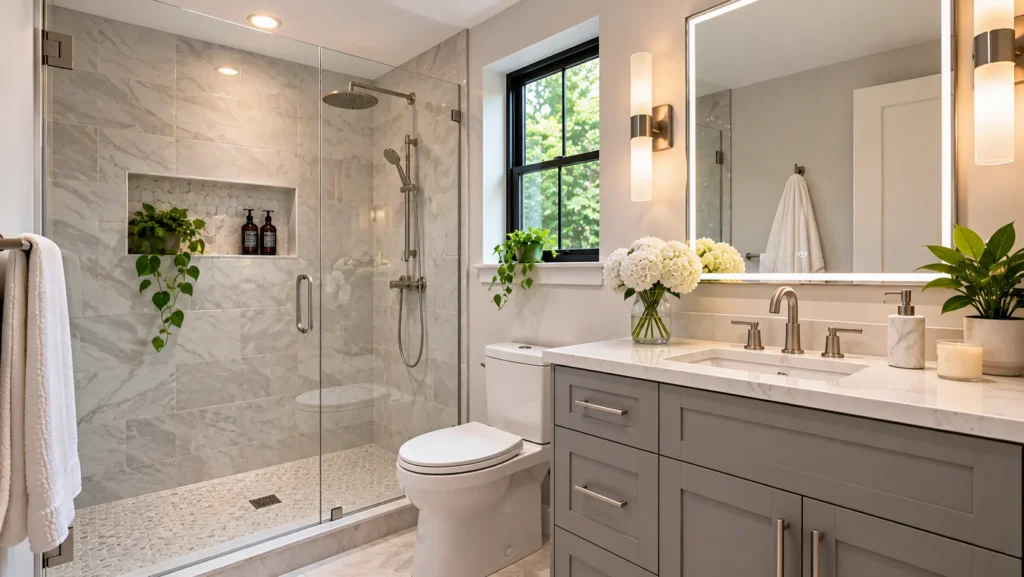
A custom shower can include floor-to-ceiling tile, a frameless glass enclosure, built-in niches, rainfall fixtures, and a linear drain.
Converting a bathtub into a shower may require additional construction, especially if the existing drain or plumbing needs to be modified.
Proper waterproofing is essential. Water damage behind shower walls can create expensive repairs that may not become visible until years later.
Homeowners planning a tub-to-shower conversion can discuss the options with a contractor experienced in bathroom renovations in Queens.
5. Bathroom Vanity and Sink: $800–$5,000+
A new vanity can improve bathroom storage, organization, and appearance.
The cost depends on the vanity size, material, countertop, sink, faucet, and installation requirements.
| Vanity type | Approximate installed cost |
|---|---|
| Basic single vanity | $800–$1,500 |
| Mid-range vanity | $1,500–$3,000 |
| Floating vanity | $1,800–$4,000 |
| Custom or double vanity | $3,000–$6,000+ |
For smaller bathrooms, a floating vanity may create a more open appearance by exposing additional floor space.
If storage is a priority, a traditional cabinet-style vanity may be more practical.
Replacing a vanity without moving the plumbing connections is usually less expensive than relocating the sink.
6. Toilet Replacement: $400–$2,000+
Replacing the toilet is a common part of bathroom remodeling.
Standard toilets are generally more affordable than wall-mounted or premium models.
Installation costs may increase if the existing drain, water supply connection, or floor needs repair.
Before selecting a new toilet, confirm the available space and rough-in dimensions.
A water-efficient model can also help reduce household water consumption.
7. Plumbing Upgrades: $1,000–$8,000+
Plumbing expenses vary depending on the age of the property and how extensively the bathroom layout changes.
Possible work includes replacing supply lines, repairing drains, relocating the toilet, installing new shower valves, and connecting fixtures.
Older Queens properties sometimes contain galvanized piping, aging drain lines, or plumbing configurations that require special attention.
Moving the toilet or shower drain can be particularly expensive because it may involve opening floors and altering existing waste piping.
Keeping plumbing fixtures in their current locations can help reduce renovation expenses.
8. Electrical, Lighting, and Ventilation: $800–$5,000+
Electrical improvements can make a bathroom safer, brighter, and more functional.
Common upgrades include:
- Vanity lighting
- Recessed ceiling lights
- Exhaust ventilation
- GFCI-protected outlets
- Illuminated mirrors
- Electric floor heating
- Additional switches and circuits
Expenses depend on the existing electrical system and whether new wiring or circuits are needed.
Ventilation is particularly important in bathrooms because excessive moisture can contribute to mold growth and damage painted or tiled surfaces.
Electrical work should be assessed and performed by appropriately licensed professionals.
Example: A $30,000 Bathroom Remodeling Budget in Queens
To understand how bathroom renovation expenses can add up, consider a hypothetical $30,000 full bathroom remodeling project.
This example assumes the existing plumbing fixture locations remain largely unchanged.
| Expense | Example budget |
|---|---|
| Demolition and debris removal | $2,000 |
| Plumbing and electrical work | $4,500 |
| Waterproofing and surface preparation | $2,500 |
| Tile materials and installation | $6,500 |
| Bathtub or shower installation | $5,000 |
| Vanity, sink, and toilet | $3,500 |
| Lighting, painting, and accessories | $2,000 |
| Other labor, delivery, permits, and finishing | $4,000 |
| Total estimated construction cost | $30,000 |
This is an illustrative budget, not an estimate issued by 718 Builders.
Homeowners should also maintain a contingency fund to cover unexpected construction conditions.
For example, adding a 15% contingency to a $30,000 project would increase the total planned budget to $34,500.
What Factors Affect Bathroom Renovation Costs in Queens?
Two bathrooms of the same size may have significantly different renovation expenses.
The age of the property, renovation scope, materials, and building requirements can all influence the total cost.
Age of the Home or Apartment
Older Queens homes may contain plumbing, electrical wiring, framing, or subfloor materials that require attention during renovation.
Problems such as moisture damage, deteriorated pipes, and damaged wall surfaces are not always visible before demolition.
These conditions can lead to additional labor and material expenses.
Changes to the Bathroom Layout
Keeping the toilet, vanity, and shower in their existing positions is generally more affordable than relocating them.
Layout modifications may require new drain lines, water supply connections, or electrical work.
Major changes can also trigger additional building approval requirements.
Material Selection
Basic ceramic tile and standard bathroom fixtures generally cost less than premium natural stone, custom vanities, and high-end shower systems.
A carefully selected combination of durable mid-range materials can create an attractive bathroom without exceeding the planned budget.
Co-op and Condominium Requirements
Many Queens homeowners live in co-op or condominium buildings.
Renovations in these properties may require approval from building management before construction begins.
Additional requirements can include:
- Alteration agreements
- Contractor insurance documentation
- Restricted construction hours
- Service elevator reservations
- Common-area protection
- Approved plumbing and electrical procedures
These requirements can affect both the renovation cost and project timeline.
Accessibility and Construction Logistics
Bathroom renovations in walk-up apartments may involve carrying materials and debris through narrow staircases.
Limited parking, building access restrictions, and delivery schedules can increase labor costs.
These conditions should be discussed before the contractor prepares a final estimate.
Do You Need a Permit to Remodel a Bathroom in Queens, NY?
Some cosmetic bathroom improvements can be completed without a Department of Buildings work permit, while more substantial renovations require approvals.
According to the NYC Department of Buildings, permit requirements depend on the complexity and scope of the work.
Bathroom Improvements That May Not Require a DOB Work Permit
Depending on the circumstances, certain minor improvements may be exempt from DOB work permit requirements.
Examples include:
- Painting bathroom walls
- Plastering and cosmetic repairs
- Certain flooring resurfacing projects
- Installing cabinets without modifying regulated building systems
These examples do not automatically exempt plumbing, electrical, or other regulated work.
Homeowners should confirm the requirements for their specific project before beginning construction.
Bathroom Renovations That Commonly Require Permits
Work that may require permits includes:
- Adding a new bathroom
- Relocating major plumbing connections
- Making substantial electrical alterations
- Removing or modifying load-bearing walls
- Performing renovations involving multiple regulated trades
The NYC Department of Buildings identifies Alteration Type 2 (ALT2) applications as a common permit filing category for renovations involving multiple types of work that do not change the building’s use, occupancy, or means of egress.
When plans and permits are required, a New York State registered architect or licensed professional engineer may need to prepare the filing.
Co-op and condominium renovations may also require board approval.
For larger residential renovation projects, coordinating approvals with a general contractor in Queens, NY can help homeowners understand the construction process and the professionals who may need to be involved.
How Long Does a Bathroom Remodel Take in Queens?
The timeline depends on the bathroom’s size, existing condition, and the extent of the renovation.
A cosmetic refresh generally takes less time than a full gut renovation.
Bathroom Remodeling Timeline
| Project type | Estimated on-site construction time |
|---|---|
| Minor cosmetic refresh | 3–7 days |
| Vanity and fixture upgrades | 1–2 weeks |
| Standard bathroom renovation | 3–5 weeks |
| Full gut bathroom remodeling | 4–8 weeks |
| Luxury bathroom renovation | 6–12+ weeks |
These are approximate construction periods. Permit approvals, architectural work, co-op board reviews, and material delivery may extend the overall project duration.
What Causes Bathroom Remodeling Delays?
Common sources of delays include:
- Unexpected plumbing problems
- Water damage discovered during demolition
- Delayed custom vanities or shower glass
- Permit or building approval requirements
- Changes to tile or fixture selections
- Inspections and scheduling conflicts
Finalizing materials and layout decisions before demolition can help limit avoidable delays.
How to Save Money on Bathroom Remodeling in Queens
You do not necessarily need luxury materials or a completely new layout to create a comfortable, attractive bathroom.
A well-planned renovation can deliver meaningful improvements while controlling costs.
Keep the Existing Plumbing Layout
Relocating the toilet, bathtub, or shower may require substantial plumbing modifications.
If the current layout is functional, retaining existing fixture locations can help reduce expenses.
Choose Porcelain or Ceramic Tile
Premium natural stone can be expensive and may require additional maintenance.
Quality porcelain and ceramic tiles provide a wide range of finishes and are often more economical.
Consider Refinishing Instead of Replacing
If your existing bathtub is structurally sound, professional refinishing may be an alternative to replacement.
Similarly, replacing only the vanity, mirror, and lighting can refresh the appearance of a bathroom without requiring a full gut renovation.
Avoid Excessive Customization
Custom glass enclosures, specialized vanities, unusual tile patterns, and premium fixtures can increase both labor and material costs.
Standard-size products may offer better value, particularly for smaller bathrooms.
Set Aside a Contingency Fund
Unexpected plumbing and moisture problems are common risks in older properties.
Maintaining a contingency reserve of approximately 10%–20% can help homeowners manage unforeseen repairs.
Renovate Multiple Rooms Strategically
If you’re planning to remodel the kitchen, bathroom, and other interior spaces, coordinating them within a larger renovation project may simplify scheduling and material deliveries.
Homeowners considering several improvements can explore home renovations in Queens, NY to understand how comprehensive remodeling projects are approached.
Is Bathroom Remodeling Worth the Investment in Queens?
Bathroom remodeling can improve the comfort, functionality, and appearance of a home.
Whether the renovation provides good financial value depends on the project’s cost, the property’s condition, and your plans for the home.
Improved Everyday Comfort
A more functional bathroom can provide better storage, brighter lighting, improved ventilation, and easier access to the shower or bathtub.
These improvements may be especially valuable in compact Queens apartments.
Potential Resale Benefits
A clean, updated bathroom can make a property more appealing to prospective buyers.
However, renovations do not guarantee an increase in resale value equal to the amount spent.
The financial return depends on the neighborhood, property type, overall market conditions, and renovation quality.
Reduced Maintenance Problems
Replacing deteriorated surfaces, leaking fixtures, and outdated plumbing can address existing maintenance concerns.
Proper waterproofing and ventilation may also help reduce the likelihood of future moisture-related damage.
Should You Remodel Your Kitchen and Bathroom at the Same Time?
Homeowners planning several upgrades sometimes consider completing their kitchen and bathroom renovations together.
Coordinating multiple rooms may create efficiencies in scheduling, demolition, material deliveries, and trade coordination.
It may also be more convenient if the property will be temporarily vacant during construction.
However, renovating both rooms at once does not automatically guarantee savings.
The project may require a larger upfront budget and could temporarily limit access to essential household facilities.
If you are planning both projects, reviewing kitchen remodeling services in Queens alongside your bathroom renovation plans can help you understand the scope of each improvement.
How to Choose a Bathroom Remodeling Contractor in Queens
Selecting the right contractor is one of the most important parts of a bathroom renovation.
A qualified contractor should be able to evaluate the existing conditions, explain the construction process, and provide a detailed written estimate.
Verify Licensing and Insurance
Before hiring, check the contractor’s applicable licenses and insurance coverage.
NYC homeowners can verify home improvement contractor licensing through the Department of Consumer and Worker Protection.
Ask About Experience With Older Queens Properties
A contractor familiar with pre-war apartments and older homes may better understand challenges involving aging plumbing, limited access, and building management requirements.
Ask to see examples of similar completed bathroom renovations.
Request an Itemized Written Estimate
The estimate should identify the included work, materials, labor, allowances, exclusions, permit responsibilities, and payment milestones.
Be cautious about comparing quotes that include different scopes of work.
Discuss Waterproofing and Plumbing
Bathrooms are exposed to substantial moisture.
Ask your contractor how shower areas, floors, and other wet surfaces will be prepared and waterproofed.
Also discuss any necessary plumbing inspections before walls or floors are closed.
Confirm the Project Schedule
Ask when construction is expected to begin, how long the work may take, and how material delays or unexpected repairs will be handled.
A clear schedule can help homeowners prepare for the disruption of temporarily losing access to the bathroom.
Why Choose 718 Builders for Bathroom Remodeling in Queens?
Bathroom renovations require careful coordination of demolition, waterproofing, plumbing, electrical work, tile installation, and fixture placement.
718 Builders provides bathroom remodeling services throughout Queens, including Astoria, Jackson Heights, Forest Hills, Flushing, Bayside, Jamaica, Sunnyside, and surrounding neighborhoods.
The company’s services include:
- Full gut bathroom renovations
- Walk-in shower installations
- Bathtub replacements and conversions
- Bathroom tile installation
- Vanity and fixture upgrades
- Small bathroom remodeling
- Primary bathroom renovations
- Permit and building approval coordination
Whether you are renovating a small apartment bathroom or planning a larger primary bathroom transformation, starting with an assessment of the existing space can help establish a realistic budget and renovation plan.
Explore 718 Builders’ bathroom remodeling services in Queens to learn more about the company’s renovation approach.
Planning a Bathroom Renovation in Queens?
Get a written estimate based on your bathroom’s dimensions, existing condition, preferred materials, and renovation goals.
Request a Free Bathroom Remodeling Estimate From 718 Builders
Or call 917-680-8696 to discuss your project.
Frequently Asked Questions About Bathroom Remodeling Costs in Queens
How much does it cost to remodel a bathroom in Queens, NY?
A limited bathroom refresh may cost approximately $5,000–$12,000, while a standard full renovation can cost $25,000–$40,000. High-end renovations involving premium materials, custom fixtures, or plumbing changes can exceed $60,000.
Can I remodel a bathroom for $10,000 in Queens?
A $10,000 budget may be sufficient for limited cosmetic improvements, such as painting, replacing a vanity, upgrading lighting, and making minor fixture changes. It is generally less realistic for a complete gut renovation requiring extensive demolition and plumbing work.
How much does it cost to remodel a 5-by-7 bathroom?
For a 35-square-foot bathroom in Queens, a complete renovation may cost approximately $18,000–$35,000 or more, depending on materials, plumbing conditions, and the extent of the work.
What is the most expensive part of bathroom remodeling?
Labor, plumbing modifications, waterproofing, and tile installation are often significant expenses. Custom showers, luxury fixtures, and structural alterations can further increase costs.
How much does it cost to replace a bathtub with a walk-in shower?
A bathtub-to-shower conversion may cost approximately $4,000–$15,000 or more, depending on the shower dimensions, waterproofing requirements, tile selection, glass enclosure, and plumbing changes.
Do I need a permit to remodel my bathroom in NYC?
It depends on the work involved. Certain cosmetic improvements may not require a DOB work permit, while significant plumbing, electrical, and structural changes commonly require approvals. Building management approval may also be necessary for co-ops and condominiums.
How long does a full bathroom renovation take?
A standard renovation may take approximately three to five weeks of on-site construction, while a full gut renovation can take four to eight weeks or longer. Permit approvals and material lead times may extend the overall schedule.
Can I live in my home during bathroom remodeling?
In many cases, yes, especially if another functioning bathroom is available. If the property has only one bathroom, homeowners may need temporary arrangements during demolition, plumbing, and fixture installation.
Does bathroom remodeling increase home value?
Bathroom remodeling can improve the appeal and functionality of a property, potentially supporting resale value. The financial return depends on the total investment, renovation quality, neighborhood, and housing market conditions.
How much should I budget for unexpected bathroom renovation costs?
Setting aside approximately 10%–20% of the construction budget is a practical starting point. Older properties or projects with significant concealed conditions may require additional reserves.
Final Thoughts
Bathroom remodeling costs in Queens, NY, depend on the size of the space, existing property conditions, materials, and the amount of construction required.
While minor upgrades may be completed with a comparatively modest budget, a full renovation involving new tile, waterproofing, plumbing, and fixtures can require a substantial investment.
Before beginning construction, establish your priorities, select materials carefully, verify permit requirements, and obtain a detailed written estimate.
Whether you are updating a compact bathroom in Astoria or renovating a larger bathroom in Bayside, thoughtful planning can help create a more functional and comfortable space.
If you’re ready to explore your options, contact 718 Builders to discuss your project and request a personalized bathroom remodeling estimate.